 Tottenham Learn Lessons from the ‘Double’ Team
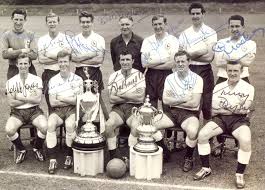
 Harry Redknapp’s Tottenham Hotspur team 2010 did their utmost to emulate Bill Nicholson’s great ‘Double’ winning team in their first foray into European football’s top club competition for forty nine years. Unfortunately, it was not one of that team’s outstanding performances that they tried to copy but rather one of their poorer and most surprising defeats.
In season 1961-62 as reward for winning the 1st Division title for the second time in their history, Spurs took part in the European Cup, the fore-runner of today’s Champions League, which had been in existence for only six years and had been the preserve of Real Madrid who had won the first five competitions.
13th September, 1961
European Cup (1st Round 1st Leg)
Tottenham were drawn against Polish champions, Gornik Zabreze with the first leg away from home. In front of a hostile 90,000 crowd Nicholson played his full strength ‘Double’ winning team and to their horror they were three goals behind at half-time. In the opening seconds the home side hit the bar and then were gifted the lead after eight minutes following a defensive error leading to an own goal. Gornik attacked at will and Spurs made numerous errors and went further behind on twenty minutes. Mistakes continued and a third goal came just before half-time. Two minutes after the interval, having failed to learn from the earlier mistakes, Gornik were presented with their fourth goal. The hostility of the crowd increased with Tottenham’s robust tackling which saw their team reduced to ten men as one of their players wentoff injured.
Twenty minutes from time the Tottenham revival started with the battling Dave Mackay making a run and cross that enabled Cliff Jones to head a goal to reduce the arrears. Four minutes later Mackay created a second with a cross that Bobby Smith knocked down for Terry Dyson to score. With no substitutes in those days Gornik Zabreze were reduced to nine men when their young centre forward went off injured twelve minutes from time.
As Spurs left the pitch to booing and whistles, the Zabreze coach said that they had played many foreign teams but this Tottenham side was the hardest he had ever known. However, Bill Nicholson was confident Spurs would overhaul the Zabreze miners in the second leg at White Hart Lane. Desmond Hackett in his match report for the Daily Express wrote: ‘This was Super Spurs reduced from champs to chumps in ninety uneasy minutes.’
Team: Brown; Baker, Henry: Blanchflower (Capt), Norman, Mackay; Jones, White, Smith, Allen, Dyson.
17th August, 2010
Champions League (4th Qualifying Round 1st Leg)
After waiting so long this was Spurs’ opportunity to make a positive start towards the new world of the Champions League group stages. But what a start – inside four minutes Tottenham had seen Young Boys of Berne hit the post with Heurelho Gomes beaten, had Benoit Assou-Ekotto booked for tripping and conceded a goal which encouraged the Swiss team and their vociferous supporters to even greater efforts. Unable to settle on the artificial surface the Spurs players were tentative in their passing, unsure of their movement and looking in some disarray. This increased after thirteen minutes when a defensive error from Michael Dawson allowed the Berne striker through on goal to finish coolly past Gomes. After half-an-hour Spurs were three down when the defence was caught out by a through ball and Gomes had no chance. This was not in the script as perceived by the Spurs faithful many of whom had anticipated a safe passage past the ‘no-hopers’ from Switzerland. However, it was very much in line with the copycat performance of events in Poland forty nine years earlier.
Harry Redknapp introduced Tom Huddlestone before the interval and this brought an element of control to the Spurs play and for the first time in the game they weren’t chasing around hopelessly but started to exert some pressure in the match which resulted in a number of corners ahead of the break and from one of them Sebastien Bassong atoned for this defensive short-comings by heading the first Spurs goal.
The second half showed Spurs with more control but despite early possession they were unable to add to their goal tally. The Swiss continued to be dangerous on the break and could have increased their lead but this time, fortunately for Tottenham, they were not as clinical in their finishing. Then with seven minutes remaining Roman Pavlyuchenko who had experience of playing on a similar artificial surface with his former club but had had a very poor evening in Berne, received a pass from Robbie Keane and hammered an unstoppable shot inside the goalkeeper’s near post. Now, only a goal down Spurs settled for what Harry Redknapp described as a ‘great defeat’.
Team: Gomes; Corluka, Dawson (Capt), Bassong, Assou-Ekotto (Huddlestone); Dos Santos, Palacios, Modric (Kranjcar), Bale: Defoe (Keane), Pavlyuchenko.
Lessons Learned
In 1961 against Zabreze Bill Nicholson was unable to make any immediate change in personnel as no substitutes were permitted but he realised that for the away European Cup games he couldn’t afford to play the same style of football that had brought the ‘Double’ team such success in domestic competitions. In future away ties he introduced Tony Marchi as an extra defensive security. He had played football in Italy and his experience played a vital role in Spurs future progress.
Harry Redknapp was fortunate that with a bench of experienced players he had the opportunity to try to correct the failings identified early in the game against Young Boys. Huddlestone contributed greatly to the control that Spurs took of the game after his introduction and the other changes saw the manager work with a narrower midfield rather that the more extravagant wide players of Giovani Dos Santos and Gareth Bale. With Luka Modric and then Nico Kranjcar on the left of midfield they came inside much more and allowed Bale to attack from defence.
The Outcome
In 1961 the return leg introduced the football world to one to the first of those great ‘Gory, Glory European Nights’ at White Hart Lane. In an electric atmosphere, Spurs hit the bar inside thirty seconds and took the lead on nine minutes with a Danny Blanchflower penalty. Cliff Jones terrorised the Gornik defence and scored a first half hat-trick in seventeen minutes but the visitors also managed to grab a goal to keep their hopes alive. Before half-time Bobby Smith scored and Spurs were 7-5 ahead on aggregate. In the second half Smith added his second, Terry Dyson scored number seven and John White completed the scoring with a minute remaining to make the score 8-1 for Tottenham.
Having followed the 1961 script so closely for the away match, it is to be hoped that Tottenham 2010 will get their lines right in a similar fashion next week to ensure the club make it into the lucrative group stages of the UEFA Champions League and that the fans don’t have to wait another forty nine years to experience competition at the highest level in European football.
 |
src="http://pagead2.googlesyndication.com/pagead/show_ads.js">