Saturday, 21st August, 2010
Victory Over Stoke Highlights Progress Made by Tottenham and Bale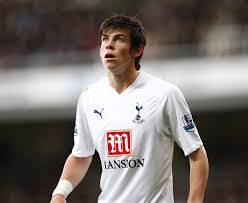 |
| Gareth Bale - two goal hero |
The win at Stoke City was an important victory for Spurs as it displayed their newly-found appetite to battle away from home against difficult opponents. It was vital to get their first Premier League victory after their encouraging performance against City a week ago and before the early season optimism wavers through pressure and doubts when results don’t go as expected. The battling display showed that Spurs are focused on campaigning on all fronts and not just being selective in the matches where they turn on a performance.
This match was set up for a Spurs’ failure sandwiched as it was between the two European qualifiers against Young Boys of Berne and in previous seasons it would have done. All the ready-made excuses were there – tiredness after travelling to Switzerland, injuries following the disappointing defeat on the artificial pitch, resting players ahead of the vital return game next week, the players distracted by the importance of the next match and Stoke are a big, strong, direct and difficult team to play against – especially at home.
Two years ago, in Stoke’s first season back in top flight football, Spurs and Gareth Bale limped away from the Britannia Stadium battered, bruised, disillusioned and defeated in what turned out to be Juande Ramos’ last league match as Tottenham manager. It was their lowest point – bottom of the league, three points adrift and as Harry Redknapp continually reminded us throughout the remainder of the season – “Spurs only had two points from eight games when I took over.”
As a team, Tottenham were in disarray, the players had lost all confidence and it was impossible to predict where the next win would come from and although it was only October, Spurs looked like a team destined for relegation. In his report on the match Matt Lawton wrote in the Daily Mail, commenting on Tottenham - ‘From the boardroom to the boot room the place is in a shambles; a sorry excuse for a football club that actually fooled itself into thinking it was on the verge of breaking into the top four of the Barclays Premier League.’
As a player, Gareth Bale was struggling as were quite a number of his colleagues. Early in the first half against Stoke Bale was caught in possession on the edge of his penalty area, conceded a rash penalty as he tried to redeem the situation and was sent off. He had yet to win a game in Tottenham colours and after an encouraging start to his Spurs’ career he was struggling to overcome the injury that had curtailed the previous season. On his comeback he was finding it extremely difficult to re-find the form that had had a host of clubs interested in signing him from Southampton. He was struggling to meet the demands of the Premier League and it was so bad that there was media speculation over how long he would remain at the club.
Twenty two months on from that depressing day, Spurs have made tremendous progress under Harry Redknapp who was unexpectedly appointed just ahead of the following weekend’s match against Bolton Wanderers. It brought Spurs’ first win of the season, although Clive Allen was officially in charge for the game. Over the two season’s Redknapp has moved the team forward. His priority in that first season was to avoid relegation and that was achieved although there were hiccups along the way. He has brought in players to strengthen the team, even if at the times they seemed unusual – including re-signing a host of former players – Jermain Defoe, Robbie Keane, Peter Crouch, Pascal Chimbonda and Younis Kaboul. Last season the manager built on that to secure fourth place in his first full season in charge and Spurs’ highest ever finish in the Premier League has brought the team to the verge of Champions League football.
Redknapp now has a squad of players which has made it possible for Spurs to rotate players and play an under-strength team which has had the organisation and ability to give a good account of itself and take three points away from home. The team for the match against Stoke was a selection that took account of injuries and the need to preserve players for the forthcoming Champions League tie. It did not fill one with confidence so shorn, was it, of important players but they played together as a team and earned their success. The football wasn’t pretty to watch but having gained the initiative in the first half all the players worked hard after the interval to preserve their lead and get the win. In previous years that would not have happened – in the past the team would have eventually succumbed to the pressure and taken nothing from the match. Never before have Spurs been in a position to field weakened teams and still win matches. In the pre-season matches it was clear that Spurs had an array of talent available as they sent out a different team for each half and both were able to give a satisfactory account of themselves against top class opponents. It is pleasing that that has now been carried forward into the league games and will enable Spurs to compete at all levels this season. Spurs showed such consistency last season that with additional European games it was going to be difficult to achieve such levels this year but the team have shown that they are capable of producing a result against difficult opposition on the weekend following the European competitions.
If Gareth Bale thinks back to that early match in his struggle for fitness and form in 2008, he will be doubly delighted at the result against Stoke and his contribution to it. From a player surrounded by doubts he has become the most exciting left sided midfield player currently playing in the Premier League. Since getting back into the team early in the year he has displayed the talent and skill of which he is capable. To date, teams have been unable to find a way to cope with his pace and direct running to score and create opportunities for the team. His two goals were at either end of the spectrum – for the first, he was fortunate to be in the right place at the right time as the Stoke defender’s clearance hit him in the face and rebounded into the goal. The second showed his ability to strike the ball perfectly with his left foot. He met the sublime cross from Aaron Lennon and dispatched the shot past the goalkeeper into the far corner of the net. No goalkeeper would have saved that shot.
Bale is an integral part of Spurs’ newly acquired belief and resilience under Harry Redknapp. He is a member of an exciting team and if successful I mid-week against Young Boys there will be further opportunities for Tottenham, Redknapp and Bale to test themselves at the highest level against top class opposition. It will be an interesting challenge.
Team: Gomes, Corluka, Dawson, Kaboul, Assou-Ekotto; Lennon (Walker), Huddlestone, Palacios, Jenas, Bale; Crouch. Subs: Alnwick, Naughton, Bassong, Kranjcar, Rose, Livermore,
Team: Gomes, Corluka, Dawson, Kaboul, Assou-Ekotto; Lennon (Walker), Huddlestone, Palacios, Jenas, Bale; Crouch. Subs: Alnwick, Naughton, Bassong, Kranjcar, Rose, Livermore,
 |
src="http://pagead2.googlesyndication.com/pagead/show_ads.js">